What Is a Monument Sign?
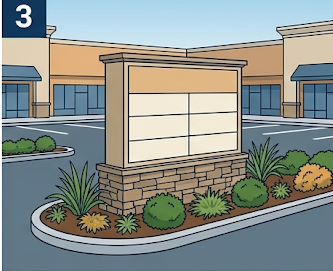
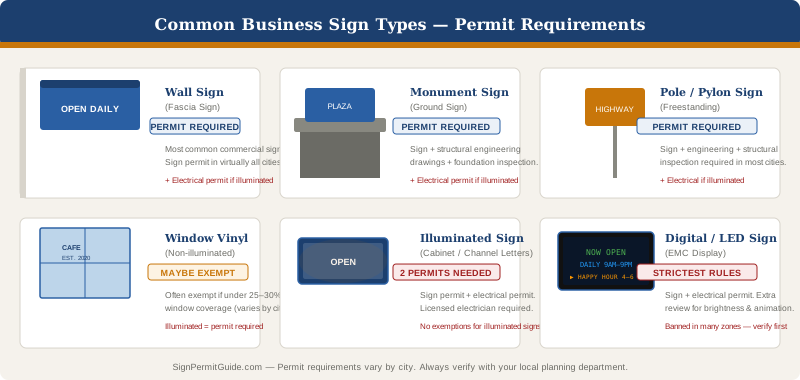
A monument sign is a freestanding sign supported by a solid, low-profile base — masonry, brick, concrete block, EIFS, or similar material — rather than exposed poles. The sign face sits close to or at ground level. Monument signs are standard at office parks, shopping centers, medical campuses, churches, schools, and multi-tenant retail properties.
They're called "monument" signs because the base resembles a monument or pedestal. The base is typically excluded from sign area calculations — only the sign face area (the part containing text or graphics) is counted toward your permit and toward your zone's maximum sign area.
Permit Requirements for Monument Signs
Monument signs require a permit in virtually every U.S. jurisdiction. There are no common exemptions for monument signs — even small ones. The permit process for a monument sign is more involved than for a wall sign because of the structural and foundation elements:
- Sign permit — from the planning or building department, as with any sign
- Structural engineering drawings — required in most cities for any freestanding sign, regardless of size. A licensed Professional Engineer (PE) in your state must stamp the foundation and structural drawings.
- Foundation/footing inspection — the concrete foundation must be inspected before the sign structure is set. This requires scheduling an inspection call and waiting for an inspector — plan for 2–5 business days.
- Electrical permit — required if the sign is illuminated. Must be pulled by a licensed electrician.
- Final inspection — after the complete sign is installed, a final inspection confirms it matches the approved drawings.
Height Limits by Zone Type
| Zone Type | Typical Height Limit | Notes |
|---|---|---|
| Commercial corridor (arterial road) | 6–8 ft total height | Most common; height measured to top of sign, not base |
| Neighborhood commercial | 4–6 ft total height | Shorter limits in areas near residential uses |
| Office / business park | 5–8 ft total height | May allow taller for campus identification signs |
| Industrial | 6–10 ft total height | More permissive in some cities |
| Downtown / CBD | Varies widely | May be prohibited; check specific district rules |
| Historic district | 4–5 ft typical | Materials and design also heavily regulated |
Setback Requirements
Freestanding signs must meet setback requirements from property lines, public rights-of-way, driveways, intersections, and sometimes other signs. Common setback rules:
- From ROW/street: 5–15 ft is typical. Some cities allow signs at the ROW line; others require significant setbacks.
- From side property lines: 5–10 ft common
- From driveways: 5–10 ft to maintain sight distance
- Corner lots: Sight-triangle restrictions often push monument signs further from intersections for traffic safety
- From other freestanding signs: Some ordinances require minimum separation between multiple monument signs on the same property
Setback violations are among the most common reasons monument sign applications are rejected. Always measure from the actual property line — not from the edge of pavement, not from the curb.
Illuminated Monument Signs
Monument signs can be illuminated in several ways, each with different permit implications:
- External ground lighting (spotlights or uplights aimed at the sign) — sign permit + electrical permit for the lighting fixtures. Most energy-efficient option for non-LED signs.
- Internally illuminated face (backlit translucent panels) — sign permit + electrical permit. Run conduit through the foundation during construction.
- LED halo or edge lighting — sign permit + electrical permit. Modern option with lower energy use.
- EMC (electronic message center) panel — sign permit + electrical permit + additional digital sign review. Subject to brightness and dwell time rules. Verify availability in your zone before purchasing.
Always run electrical conduit through the concrete foundation before the foundation is poured — retrofitting conduit afterward is expensive and may require a new foundation inspection.
Design Considerations That Affect Permits
- Base material: Solid masonry bases typically require less engineering scrutiny than lighter foam/EIFS bases. Some historic districts require specific materials.
- Cabinet vs. open-face: Cabinet signs (enclosed faces) vs. open-face channel letter monuments have different engineering profiles. Open-face signs with exposed structure may have different height calculations.
- Multi-tenant panels: If you're adding tenant panels, each panel swap may or may not require a new permit depending on whether it changes the total sign area.
- Landscaping: Many sign ordinances require landscaping around monument sign bases (a planted area around the base). This is often a condition of permit approval, not a suggestion.
What a Monument Sign Permit Costs
| Cost Component | Typical Range | Notes |
|---|---|---|
| Sign permit fee | $75–$400 | Base + per sq ft; higher in large cities |
| Electrical permit (if illuminated) | $60–$250 | Separate permit from electrical division |
| Structural engineering drawings | $300–$1,200 | Required in most cities; PE-stamped |
| Foundation inspection | Usually included in permit fee | Must schedule separately |
| Final inspection | Usually included in permit fee | Sign cannot be used until final inspection passes |
Monument Sign FAQs
For the sign structure: possibly, if you're not installing in a jurisdiction that requires a licensed sign contractor. However, the electrical work almost always requires a licensed electrician. The foundation typically needs to be inspected before the sign structure is set — if you pour the foundation and set the sign before the inspection, you may have to remove the sign so the foundation can be inspected. Coordinate the inspection scheduling before you start construction.
Not necessarily. Check your city's permit portal by entering the property address and looking for sign permits in the permit history. If no sign permit appears, treat the sign as potentially unpermitted. For commercial real estate transactions, request sign permit documentation as part of your due diligence. An unpermitted sign discovered post-closing becomes your responsibility.
Planning a monument sign?
Download our sign permit checklist — includes the specific items required for freestanding signs and structural engineering submissions.
Download Checklist →Estimate Fees →Disclaimer: Monument sign permit requirements vary by city, county, and zoning district. Always verify current requirements with your local planning department and ensure your structural engineer is licensed in your state.