How Code Enforcement Finds Out
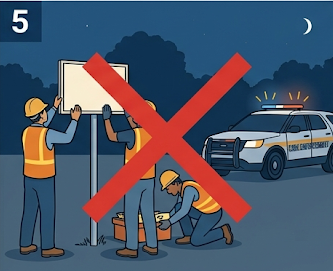
The most common trigger for sign enforcement action is a complaint — from a neighbor, a competing business, or an adjacent property owner. Code enforcement officers also conduct their own sweeps, particularly in commercial corridors and downtown districts. New sign installations are visible and draw attention.
Additional triggers include:
- Permit records searches — when you apply for any other permit (renovation, business license renewal), staff sometimes cross-check whether your signage is permitted
- Insurance inspections — commercial property insurers sometimes flag unpermitted signs during policy renewals
- Business sales and title searches — due diligence for commercial property sales routinely turns up sign permit violations
- Your sign company — reputable sign installers in most jurisdictions are required to pull permits before installation; if your installer skipped this step, that's a red flag about their practice
What Happens When You're Cited
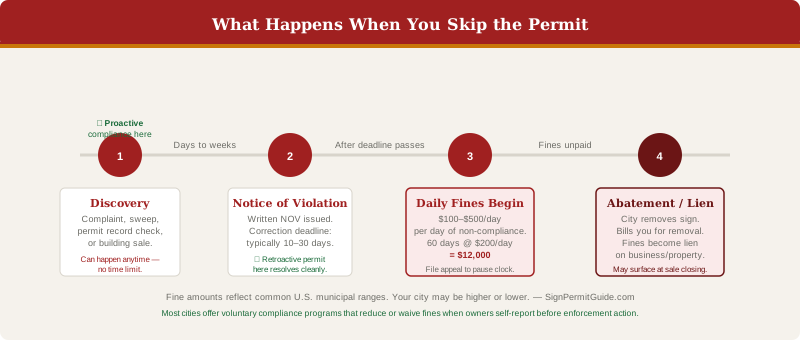
The sequence varies by city, but the typical enforcement progression looks like this:
- Notice of Violation (NOV) — code enforcement mails or posts a written notice stating the violation, the applicable code section, and a compliance deadline. This is not yet a fine.
- Correction period — you're given a window (typically 10–30 days) to either remove the sign or obtain the required permit. This is your best exit: if you can get the permit approved during this period, the violation is typically resolved without fines.
- Fine issuance — if you don't comply by the deadline, the city begins issuing fines. These are commonly $100–$500 per day for each day the violation continues. Some cities treat each day as a new, separately citable offense.
- Abatement order — if fines go unpaid and the sign remains, the city can order the sign removed. In some jurisdictions, the city can hire a contractor to remove the sign and bill you for the removal cost.
- Collection and lien — unpaid fines can be placed as liens on your business or property, collected through small claims court, or referred to a collection agency.
Real Fine Ranges by City Type
| Municipality Type | Typical First Offense | Daily Fine (After NOV) | Notes |
|---|---|---|---|
| Small city / township | Warning + notice | $50–$150/day | Often more flexible on correction periods |
| Mid-size city (50K–300K pop.) | $100–$250 flat + notice | $100–$300/day | Formal process; written appeal available |
| Large city (300K+ pop.) | $250–$500 flat + notice | $200–$500/day | Stricter enforcement; more resources for follow-up |
| Historic district (any city) | Higher fines, faster escalation | $300–$1,000/day | Historic preservation violations treated more seriously |
The Hidden Problem: Business Sales
One of the most damaging consequences of unpermitted signs isn't fines — it's what happens when you try to sell your business. Due diligence for any commercial business sale includes a review of open permits and code violations. An unpermitted sign that's been on your building for five years without incident can surface during the sale process and either kill the deal or force you to resolve it immediately at closing.
In most states, unpermitted signs that are discovered during a property or business sale must be either:
- Brought into compliance (permitted retroactively, if possible) before or at closing, or
- Removed entirely
If the violation was ongoing for years, back-fines can be assessed even if enforcement was never initiated. This is uncommon but has occurred in cities with aggressive code enforcement programs.
How to Fix an Unpermitted Sign
If you have an unpermitted sign already installed — whether it was there when you moved in or you installed it without knowing — here's the most effective path to resolution:
Step 1: Don't wait for enforcement
Proactively contacting your planning department and disclosing the situation is almost always treated more favorably than waiting to be cited. Many cities offer a "voluntary compliance" process that reduces or waives fines for owners who self-report. Ask your planning department specifically whether this program exists before your first contact.
Step 2: Find out if the sign can be permitted retroactively
In most cases, a sign that has been installed without a permit can still be permitted — as long as it meets the current sign code requirements for your location. This is called a "retroactive permit" or "permit for existing construction." The process is identical to a new permit application, except you describe the sign as already installed.
If the sign doesn't meet current code (it's too large, in the wrong location, or the wrong type for your zone), you'll have to modify or remove it. There's no variance that allows a permanently non-conforming sign to remain in most jurisdictions.
Step 3: Document everything about the sign
Before meeting with the planning department, gather:
- ✓ Photographs of the sign from multiple angles
- ✓ Exact dimensions (height, width, letter height, overall square footage)
- ✓ Information on illumination (lit or unlit, electrical connection details)
- ✓ How the sign is attached to the building (bolted, adhesive, etc.)
- ✓ Any documentation of when it was installed (prior tenant records, photos, contractor invoices)
Step 4: Apply for the permit
File a standard sign permit application disclosing that the sign is existing. Pay the normal permit fee. An inspector will visit to confirm the sign matches your drawings and complies with the code. If it passes, you're issued a permit and the violation is closed.
Step 5: If you received a Notice of Violation
Respond in writing to the code enforcement officer before the deadline. State that you are in the process of obtaining a retroactive permit and provide documentation of your application submission. Most cities will pause the fine clock if you can show active steps toward compliance. Get any pause in writing.
Inherited Unpermitted Signs: What Tenants and New Owners Face
A common situation: you move into a space and there are signs already on the building. The previous tenant installed them; you didn't know they weren't permitted. Who's responsible?
The answer varies by jurisdiction, but in most cases:
- The current business occupant is responsible for signs on their premises, regardless of who installed them
- The property owner may also be cited, particularly for signs on the building structure
- A lease clause that makes the landlord responsible for pre-existing code violations is worth having, but doesn't change your exposure to city enforcement
Best practice for new tenants: before signing a lease, ask the landlord for documentation that all existing signage is permitted. If they can't provide it, you have three options: negotiate for the landlord to permit or remove non-compliant signs before occupancy, budget for the permitting cost yourself, or accept the risk of inheriting a violation.
Enforcement FAQs
Not necessarily. There is generally no statute of limitations on sign permit violations — a sign can be cited at any time while it remains in place. Cities periodically conduct sign compliance sweeps, and complaints can be filed by anyone at any time. The fact that you haven't been cited yet is a statement about enforcement resources, not legality. The risk doesn't expire; it accumulates.
Yes. Every city that issues fines must have a formal appeals process. The notice of violation you receive will include information on how and when to file an appeal. Common grounds for appeal include: the sign was exempt and the city made an error, the sign was installed by the landlord and you have documentation, or there's a procedural error in how the notice was issued. Filing an appeal typically pauses the fine clock while the appeal is pending. You should file even if you're not sure you'll win — it buys time and creates a formal record.
This is unfortunately common. The sign company's failure to obtain the permit doesn't transfer your liability for the violation. However, you may have a civil claim against the sign company for breach of contract (if they agreed to permit the sign) or negligent misrepresentation. Document all communications with the company. Then focus on resolving the code issue immediately — the fastest path to compliance is still to apply for the permit yourself. Pursue your claim against the sign company separately through your state's contractor licensing board or small claims court.
The Complete Guide to Zoning — Dwight H. Merriam
Written by a land use attorney and described as "the definitive guide to zoning," this is the clearest plain-English resource for understanding how local zoning and sign codes work — including how to navigate planning departments, appeal decisions, and understand variance processes.
View on Amazon →As an Amazon Associate, SignPermitGuide earns from qualifying purchases.
Already have an unpermitted sign?
Download our checklist for retroactive sign permitting — what to document, what to say to code enforcement, and how to apply for a permit on an existing installation.
Download the Checklist →Disclaimer: This page is for general informational purposes only and does not constitute legal advice. Fine amounts, enforcement processes, and appeal procedures vary by city and county. If you have received a notice of violation, consult directly with your local code enforcement office and consider consulting a local attorney if significant fines are involved.